Season 1, episode 21: “Love, Daisies and Troubadours”
Original air date: 10 May 2001
Directed by: Amy Sherman-Palladino
Written by: Daniel Palladino
Summary: Lorelai and Rory each reach a turning point in their love lives: Rory seeks reconciliation with Dean, and Lorelai must decide her future with Max.
On this page: All References in Chronological Order | References Sorted by Category | Frequent References | Indigenous Land Acknowledgment
All References in Chronological Order
01:05 – 🎥 reference
LORELAI: Dear God Almighty, Mr. Murkle!
- A user in the r/GilmoreGirls subreddit suggests this may be an obscure reference to the 1934 film, It’s a Gift (dir. Norman Z. MacLeod). W. C. Fields stars as a New Jersey grocer who plans to relocate to California to start an orange ranch. In one scene, a customer named Mr. Muckle, who is blind and hard of hearing, enters the grocery store, noisily knocking over and shattering objects as he goes. When other characters say his name, it sometimes comes out sounding like “Murkle.” This reference seems like a stretch, but it’s plausible, and I can’t find any better explanation!
- MacLeod also directed Horse Feathers (1932), a Marx Brothers movie referenced later in this episode.
01:10 – 🎧 reference
LORELAI: You are not sleeping through this!
RORY: Through what?
LORELAI: The frickin’ Blue Man Group is outside our house!
- The Blue Man Group is a US performance art group formed in 1987. Though the cast has rotated over time, the group always consists of three performers, known as Blue Men. (At least one woman, Andrea Johnson, has performed as a Blue Man.) They perform wearing matching black outfits, bald caps, and blue body paint. Though they are mute on stage, their act involves a musical component; they are known for drumming on PVC instruments, as seen in this video.
01:20 – ⭐ reference
LORELAI: It had to have woken you up!
RORY: No, my insane mother, Margot Kidder Gilmore, woke me up.
- Margot Kidder (1948-2018) was a US-Canadian actor known for her roles as Lois Lane in the original Superman movies (1978-1987) and Kathy Lutz in The Amityville Horror (1979). Kidder was diagnosed with bipolar disorder, and she experienced a highly publicized manic episode in 1996; while suffering from paranoid delusions, she disappeared for four days in Los Angeles before turning up in the backyard of a stranger. Sadly, she took her own life in 2018.
04:15 – 📖 reference
LORELAI: Webster’s defines “ennui” as “a lazy, soon-to-be-out-of-work French concierge who won’t answer the phone.”
- Webster’s Dictionary is an English-language dictionary named for its 19th-century editor Noah Webster. The first edition, titled American Dictionary of the English Language, was published in 1828. “Merriam-Webster is the corporate heir to Noah Webster’s original works, which are in the public domain” (Wikipedia).
06:15 – 🏷️ mention + 🏷️ feature
LORELAI: I had the weirdest dream last night. We were in our house, but it wasn’t our house – it was a Kentucky Fried Chicken.
Rory eats Kellogg’s Corn Flakes from the box, which is sitting on the kitchen table.
- KFC Corporation is a US chain of fast-food restaurants specializing in fried chicken. Founded by US businessman Colonel Harland Sanders, it opened its first franchise location under the name Kentucky Fried Chicken in 1952. The title of “Colonel” does not denote military rank in Sanders’ case, but is an honorable title awarded by the Southeastern US state of Kentucky to noteworthy civilians. Sanders’ face appears in the KFC logo to this day.
- Kellanova (formerly known as Kellogg Company or simply Kellogg’s) is a US multinational company that produces convenience and snack foods, including several well-known brands of breakfast cereal. It was launched in 1906 as the Battle Creek Toasted Corn Flake Company, named for the cereal created by company founder Will Kellogg in 1894. As of 2023, WK Kellogg Co, a spinoff of Kellanova, manages the company’s cereal production in North America.
07:20 – 🎥 reference + 📖 reference
LORELAI: Hey, who was the guy who used to run the auto body shop?
LUKE: The Stretch Cunningham guy?
LORELAI: No, the Dick Tracy guy.
LUKE: Big, always had a half-smoked cigar in his mouth?
- Jerome “Stretch” Cunningham is a recurring character on the US television sitcom All in the Family (1971-1979), which follows a working-class white family living in Queens, New York. He is played by US actor James Cromwell, who is known for his slim frame and great height of 6’7″ (2.01 m). Stretch is a friend and coworker of the family patriarch, Archie Bunker, whose prejudices are challenged when he learns that Stretch is Jewish.
- All in the Family “broke ground by introducing challenging and complex issues into mainstream network television comedy” (Wikipedia), often via the “lovable bigot” Archie Bunker. Sally Struthers (who plays Babette) appeared in the first eight seasons as Archie’s daughter, Gloria. Liz Torres (who plays Miss Patty) also appeared on the show in a recurring role from 1976 to 1977.
- Dick Tracy is a US comic strip created by Chester Gould and drawn by Gould from 1931 to 1977. Its eponymous character is a hard-boiled detective known for his intelligence and his use of gadgets to thwart criminals. He is portrayed in the comics as tall, square-jawed, and wearing a yellow trench coat; Luke and Lorelai’s description of a heavyset, cigar-smoking man sounds more like an archetypal 1930s gangster, perhaps one of the villains from the comic. A film adaptation of the comic, directed by and starring Warren Beatty, was released in 1990.
- Coincidentally, both All in the Family and Dick Tracy were controversial in their time – All in the Family for its confrontation of social issues, and Dick Tracy for its portrayal of violence.
09:20 – 🎥 reference
LANE: What I wanted to say was, “Janie Fertman, you are a vacuous bimbo who will be turning letters as a profession one day, and the only way you’ll know which letter to turn is when it dings and lights up.”
- Wheel of Fortune is a US television game show in which “contestants solve word puzzles, similar to those in hangman, to win cash and prizes determined by spinning a giant carnival wheel” (Wikipedia). The show features a host, who announces categories and gives clues to contestants, and a hostess, who activates letters on a puzzle board when contestants correctly guess them. Model Susan Stafford filled the latter role from the show’s premiere in 1975 until 1982, when Vanna White took over. Wheel of Fortune is the longest-running syndicated game show in the US, and the second-longest-running in either network or syndication, after The Price Is Right.
09:35 – 🎥 reference
LANE: Cheerleader material! Just like that. I couldn’t believe it. I almost went full Matrix on her.
- The Matrix is a 1999 science-fiction action film directed by Lana and Lilly Wachowski. It “depicts a dystopian future in which humanity is unknowingly trapped inside the Matrix, a simulated reality that intelligent machines have created to distract humans while using their bodies as an energy source” (Wikipedia). The film features elaborate fight sequences incorporating martial arts styles and wire techniques borrowed from Hong Kong action films. It was selected for preservation in the US National Film Registry in 2012.
10:15 – 🎥 reference
LANE: I love you, but you’ve been mopey, dopey, and about twelve other melancholy dwarfs for the past five weeks.
- Snow White and the Seven Dwarfs (1937) is a US animated musical fantasy film produced by Walt Disney. It is an adaptation of the German fairy tale “Schneewittchen” (originally spelled “Sneewittchen”), which was recorded by the Brothers Grimm in their 1812 Grimms’ Fairy Tales. In both versions, the protagonist, Snow White, flees the wrath of an evil queen who is jealous of her beauty, finding shelter in the home of seven dwarfs. In the Disney film, all but one of the dwarfs (Doc) has an adjectival name: Grumpy, Happy, Sleepy, Bashful, Sneezy, and Dopey. In the original story, they had no individual names. The portrayal of the dwarfs has proved controversial among people with dwarfism.
- David D. Hand acted as supervising director for the film, overseeing a team of six sequence directors. The film is noted for being the first feature-length animated film produced in the US, and was among the inaugural group of films selected for preservation in the US National Film Registry when the Registry was established in 1989. Other fairy tales related by the Brothers Grimm, including “Cinderella,” “Rapunzel,” “Little Red Riding Hood,” “Sleeping Beauty,” and “Hansel and Gretel” have been referenced in previous episodes.
10:25 – 🎧 reference
RORY: Well, she’s staging a comeback.
LANE: And may it be more successful than Peter Frampton’s.
- Peter Frampton (born 1950) is an English-born guitarist and singer-songwriter who gained recognition for his work in the rock bands the Herd and Humble Pie. He later achieved success as a solo artist, most notably with his breakthrough 1976 album, Frampton Comes Alive! His 1977 followup, I’m in You, was successful, but fell short of expectations set by the previous album, and his career suffered a decline in the 1980s. In 1987, he played on the David Bowie album Never Let Me Down and accompanied Bowie on his Glass Spider Tour, a collaboration Frampton would later credit with giving a boost to his career.
12:40 – 🎧 mention
RORY: You swear? On the life of the lead singer of Blur?
LANE: On the soul of Nico.
- Blur is an English rock band formed in 1988. “The band helped to popularise the Britpop genre [in the 1990s] and achieved mass popularity in the [United Kingdom], aided by a widely publicised chart battle with rival band Oasis” (Wikipedia). Damon Albarn (born 1968) has been the band’s frontman and lead vocalist since its inception. He is also a co-creator and the only permanent member the virtual band Gorillaz, which debuted in 2001. (A virtual band is a musical group whose members are animated characters rather than real people.)
- Nico (born Christa Päffgen, 1938-1988) was a German singer, model, and actor known for her vocal contributions to the 1967 album The Velvet Underground & Nico by US rock band the Velvet Underground. Lane previously expressed admiration for the band and for Nico in episode twelve.
12:50 – 🎧 feature
The town troubadour (played by Grant-Lee Phillips) sits on a flight of steps playing “Honey Don’t Think” by Grant Lee Buffalo.
- This song comes from the 1994 album Mighty Joe Moon by US rock band Grant Lee Buffalo. Songs by the band and by its singer and lead guitarist, Grant-Lee Phillips, have been featured in episode five, in episode fourteen at 09:45 and 40:25, in episode sixteen at 05:05 and 37:45, and in episode eighteen. Phillips performs two others in this episode at 16:55 and 42:00.
13:10 – 📖 feature
TRISTAN: You should decorate this thing.
RORY: I did.
TRISTAN: Well, I mean with something other than a bunch of dead, black-and-white women.
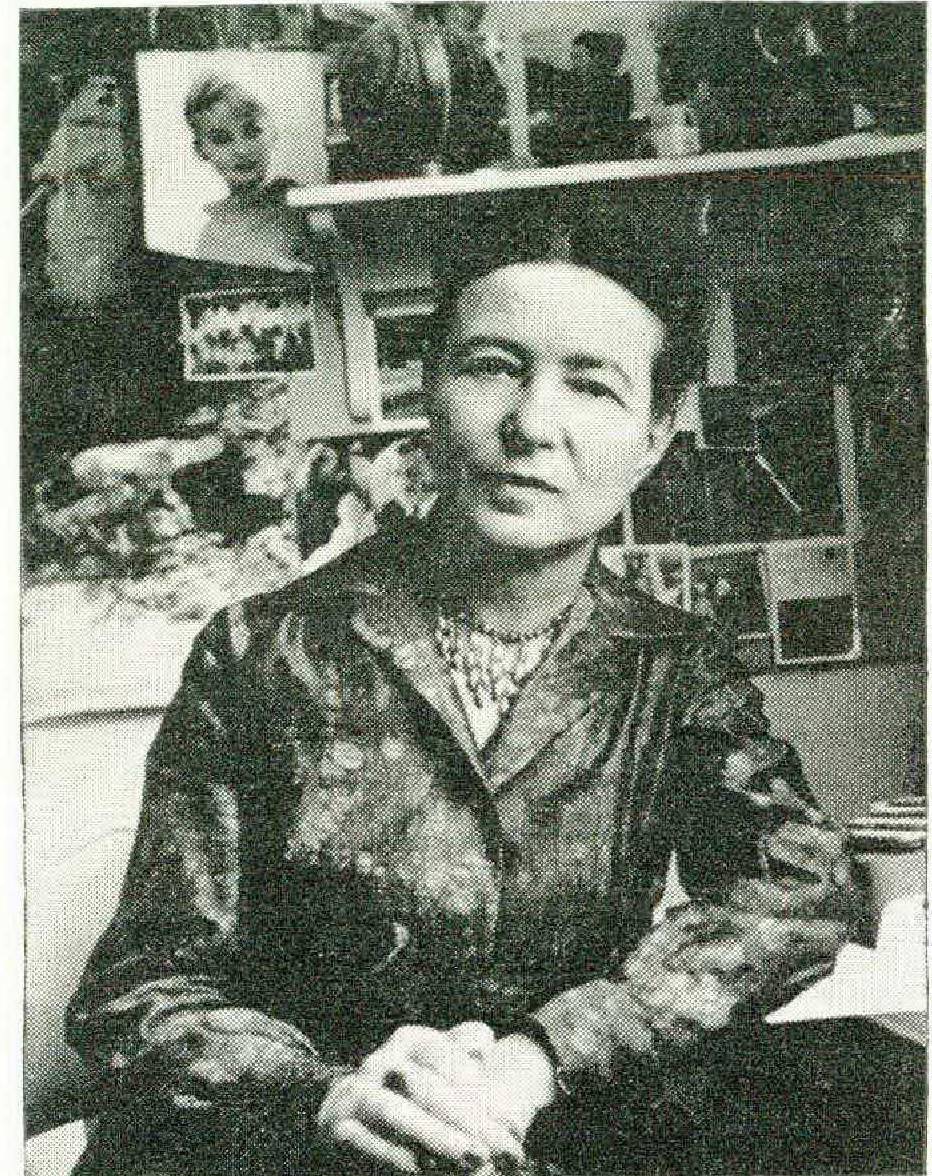
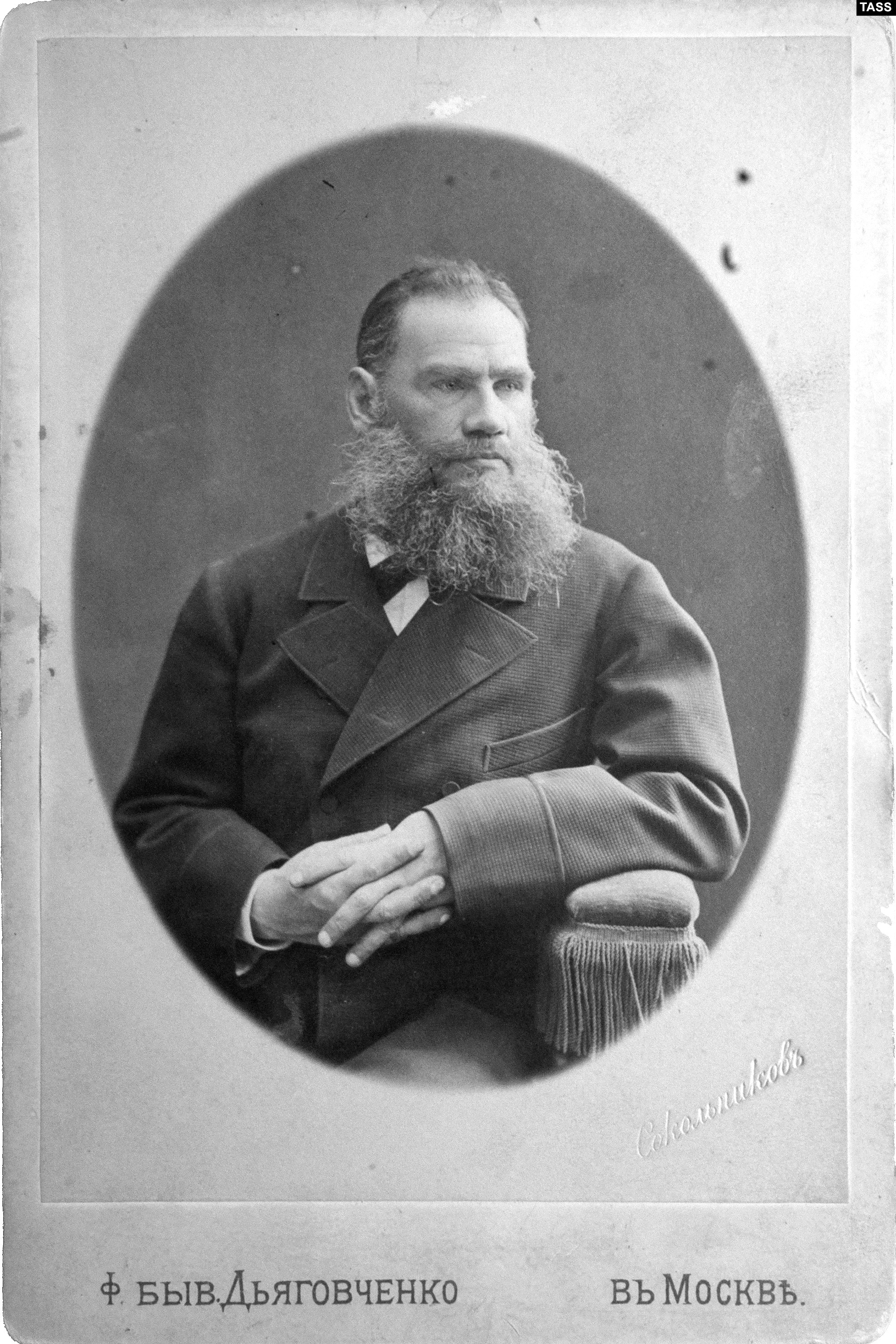
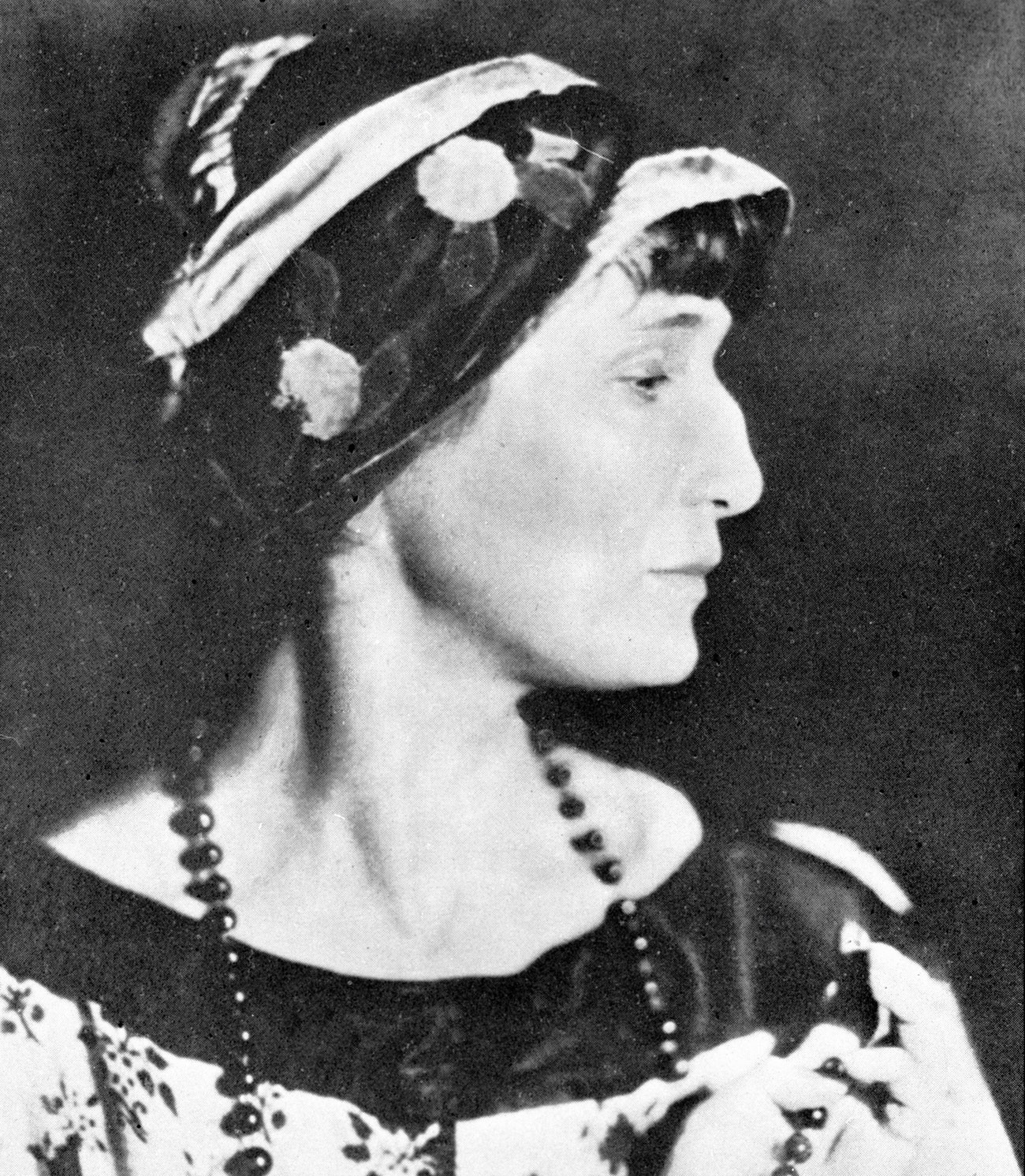
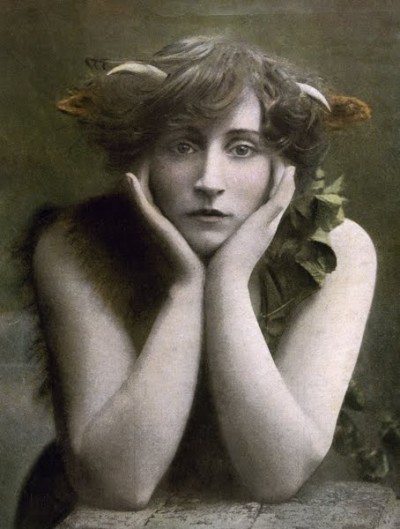
Rory’s locker door is decorated with photos of famous authors, all of whom are dead and most of whom are women. I am linking each author’s name with the photo shown in Rory’s locker. Previously mentioned authors include…
- English author Jane Austen (1775-1817), whose book Pride and Prejudice (1813) was featured in episode eight.
- French philosopher and feminist Simone de Beauvoir (1908-1986), whose book, The Second Sex (1949), was very briefly featured in the pilot episode.
- US poet Emily Dickinson (1830-1886), who was mentioned in episode eight. She was quoted in episode eleven at 07:55, and Rory read a book of her poetry in the same episode at 30:45.
- Russian author Fyodor Dostoevsky (Russian: Фёдор Михайлович Достоевский, 1821-1881), who was mentioned in episode two.
- Irish author James Joyce (1882-1941), whose book Finnegans Wake (1939) was referenced in the title of episode five, “Cinnamon’s Wake.” Rory read another of his books, Ulysses (1922), in episode twenty.
- US author and poet Sylvia Plath (1932-1963), whose published journals Rory read in episode twelve and whose book, The Bell Jar (1963), Lorelai referenced in episode seventeen.
- Russian author Lev Tolstoy (Russian: Лев Николаевич Толстой, 1828-1910), who was mentioned in episode two and whose book, Anna Karenina (1878), Rory and Dean discussed in episode sixteen. He is commonly referred to in English as Leo Tolstoy.
- English author Virginia Woolf (1882-1941), whose book, A Room of One’s Own (1929), Rory read in episode five. The 1962 play, Who’s Afraid of Virginia Woolf?, was also mentioned in episode seventeen.
_hires.jpg)

:max_bytes(150000):strip_icc()/GettyImages-515448914-87d20cc75c0847d69253c6b0a3d2ad6a.jpg)


- Previously unmentioned writers include Russian poet Anna Andreyevna Gorenko (born Anna Andreevna Gorenko, 1889-1966), better known by her pen name Anna Akhamatova, and French author Sidonie-Gabrielle Colette (1873-1954), often referred to as simply Colette. Rory pulls a biography of Colette from her locker during this same scene.
13:25 – 🎧 mention
TRISTAN: You know what these are?
RORY: They look like tickets.
TRISTAN: To PJ Harvey.
RORY: Wow. You have good taste, I’ll give you that.
36:45
TRISTAN: I don’t even know anybody else who’s even into this stupid guy.
RORY: PJ Harvey’s a woman.
- PJ Harvey (born Polly Jean Harvey, 1969) is an English singer-songwriter who has been active in music since 1988. Her body of work is stylistically diverse, spanning “alternative rock, punk blues, art rock, avant-rock, and grunge” (Wikipedia), with forays into “electronica, indie rock and folk music.” She has said that she aims not to repeat herself from one album to the next, even going so far as to alter her physical appearance and craft a distinct aesthetic for every album.
- “One Line,” a 2000 song by Harvey, is featured later in this episode.
13:50 – 📖 feature
Rory unloads books from her locker while talking to Tristan. She carries Glencoe English and Secrets of the Flesh: A Life of Colette.
- Glencoe English is a textbook covering composition, speech, and grammar. Though this one is a teacher’s edition published in 1981, it looks a lot like the one Rory carries.
- Rory carries this edition of Secrets of the Flesh: A Life of Colette, a 2000 biography of the French writer Sidonie-Gabrielle Colette (1873-1954), often referred to as simply Colette. The biography was written by Judith Thurman, who is also known for her 1983 biography of Isak Dinesen. Colette is among the writers whose photos are visible in Rory’s locker.
- Colette is best known for her 1944 novella Gigi, which was made into a movie directed by Vincente Minnelli and starring Maurice Chevalier in 1958. In addition to her writing, she is known for her passionate personal life, which included affairs with men and women. Encyclopaedia Britannica describes her novels as “largely concerned with the pains and pleasures of love” and “remarkable for their command of sensual description.”
14:10 – ⭐ reference
MADELINE: So, I’ve decided I’m now completely into Judy Garland. Did you see the TV movie? Pretty intense.
LOUISE: I think they used my mother’s medicine cabinet in that.
MADELINE: She was the Courtney Love of her day.
- Life with Judy Garland: Me and My Shadows is a 2001 US television miniseries about the life of legendary US actor and singer Judy Garland (born Frances Gumm, 1922-1969). It is based on the 1998 book Me and My Shadows: A Family Memoir, written by Garland’s daughter Lorna Luft. The two-part, four-hour series chronicles Garland’s rise to fame in the 1930s, ensuing struggles with drug and alcohol addiction, and career comeback in the 1950s. Tammy Blanchard plays Garland from ages 12 to 21, and Judy Davis plays her in adulthood.
- Vincente Minnelli, who directed the 1958 film Gigi (mentioned above), was Garland’s second husband. The Wizard of Oz (1939), one of Garland’s most iconic films, was referenced previously in episodes ten and thirteen.
- Courtney Love (born Courtney Harrison, 1964) is a US musician and actor known for her work as lead vocalist and rhythm guitarist of the alternative rock band Hole. “Love has drawn public attention for her uninhibited live performances and confrontational lyrics, as well as her highly publicized personal life following her marriage to Nirvana frontman Kurt Cobain” (Wikipedia). Media coverage often centered on the couple’s drug use, with a particularly notorious piece, published in the September 1992 issue of Vanity Fair, alleging that Love had used heroin while pregnant. Love denied the claim, but the damage to the couple’s reputation was sufficient to result in a temporary loss of custody over their infant daughter, Frances.
14:50 – 🎧 feature
MISS PATTY: And your hearts are broken. Your prince has betrayed you. You’ve been shot with an arrow, and now… You’re dead.
Miss Patty’s ballet class practices to the “Swan Theme” from Swan Lake.
- Swan Lake (Russian: Лебеди́ное о́зеро), Op. 20, “is a ballet composed by Russian composer Pyotr Ilyich Tchaikovsky in 1875-76. Despite its initial failure, it is now one of the most popular of all ballets” (Wikipedia). The story, adapted from Russian and German folk tales, follows a princess named Odette who is cursed by an evil sorcerer to transform into a swan by night. The curse may be broken if a person who has never loved before swears to love only her. She meets a prince who is willing to do so, but the sorcerer tricks him into pledging his love to another woman. The ballet’s conclusion is bittersweet – the couple dies together, but the sorcerer’s spell over other swan maidens, who had been cursed like Odette, is broken.
16:55 – 🎧 feature
The town troubadour (played by Grant-Lee Phillips) plays his song “Sadness Soot” before being interrupted by a rival troubadour strumming a guitar and whistling across the street.
- This song comes from the 2001 album Mobilize by US singer-songwriter Grant-Lee Phillips. Solo songs by Phillips and songs by his band, Grant Lee Buffalo, have been featured in episode five, in episode fourteen at 09:45 and 40:25, in episode sixteen at 05:05 and 37:45, and in episode eighteen. Phillips performs two others in this episode at 12:50 and 42:00.
- If Dave Allen, the actor playing the rival troubadour, looks familiar, you may recognize him as Jeff Rosso from the US teen comedy-drama television series Freaks and Geeks (1999-2000).
17:25 – 🎥 reference
LORELAI: You have crossed over into the dark side, Luke.
- In the Star Wars franchise, “the Force” is a metaphysical energy existing in all life forms and binding together all the contents of the universe. Some characters are considered “Force-sensitive,” meaning they have a conscious sense of the Force and can actively channel it, accessing abilities known as “Force powers.” Such powers can be used for good or ill, presenting Force-sensitive individuals with a choice between the light and dark sides of the Force. The protagonist of the 1977-1983 original trilogy, Luke Skywalker (Mark Hamill), is one such individual, and he faces multiple attempts to recruit him to the dark side.
18:25 – 🏷️ mention
LORELAI: Maybe you can train Rachel to use a Magic Marker to mark the milk exactly where you left it.
- Though “magic marker” is often used as a generic term for felt tip pens, it was originally coined by inventor Sidney Rosenthal for the marking pen he created in 1953.
18:45 – ⚖️ reference + ⭐ reference
LUKE: Some guys are just naturally loners.
LORELAI: Yes, lonely guys.
LUKE: Independent guys.
LORELAI: Sad guys.
LUKE: Maverick guys.
LORELAI: Lee Harvey Oswald.
LUKE: John Muir.
LORELAI: The Unabomber.
LUKE: Henry David Thoreau.
- On 22 November 1963, US man Lee Harvey Oswald (1939-1963) shot and killed President John F. Kennedy from a sixth-story window as Kennedy, then on a visit to Dallas, Texas, passed in a motorcade. (Incidentally, the car in which Kennedy rode was a Lincoln Continental.) About 45 minutes later, Oswald shot and killed Dallas police officer J. D. Tippit before slipping into a local movie theater, where he was apprehended by other officers. Oswald, himself, was murdered two days later while in custody. Official findings concluded that Oswald acted alone in his plot to kill Kennedy, though this has been the subject of ongoing conspiracy theory. Regardless, he did not exactly fit the loner stereotype, given that he was married and had two children at the time of his death.
- John Muir (1938-1914) was a Scottish-born US naturalist, author, and an early advocate for the preservation of US wilderness. Sometimes known as the Father of the National Parks, “his activism helped to preserve…Sequoia National Park,” (Wikipedia) and led to the creation of Yosemite National Park. In 1892, he co-founded the Sierra Club, a US environmental organization that still exists today. Though he was known to travel alone on wilderness excursions, he was also married, had children, and maintained close friendships.
- Theodore “Ted” Kaczynski (1942-2023) was a US domestic terrorist who carried out a nationwide mail bombing campaign between 1978 and 1995, killing three people and injuring 23 others. He targeted those “he believed to be advancing modern technology and the destruction of the natural environment” (Wikipedia), laying out his motives in a 35,000-word manifesto titled Industrial Society and Its Future. Kaczynski lived as a recluse and survivalist in a cabin in rural Montana. By the time of his arrest in 1996, he was the subject of the longest and most expensive investigation in the history of the FBI. “The FBI used the case identifier UNABOM (University and Airline Bomber) before his identity was known, resulting in the media naming him the ‘Unabomber.’” Kaczynski was referenced previously in episode eighteen.
- Henry David Thoreau (David Henry Thoreau, 1817-1862) was a US naturalist, author, and transcendentalist philosopher. For two years, beginning in 1845, Thoreau lived in a cabin he built near Walden Pond in Massachusetts, in pursuit of self-reliance and simple living; he based the book Walden; or, Life in the Woods (1849) on this experience. (He is also known for his 1849 essay, “Civil Disobedience,” in which he promotes the right and duty of citizens to resist injustice perpetrated by government.) Though Thoreau never married or had children, he had a circle of friends among contemporary thinkers, including Ralph Waldo Emerson.
19:30 – 🗺️ reference
LORELAI: You just need to give the situation a fair chance.
LUKE: I know.
LORELAI: And that starts with ceasing work on the Winchester Mystery House here.
- The Winchester Mystery House is a mansion and tourist attraction located in San Jose, California. It is named for its builder and former resident Sarah Winchester, the wealthy widow of firearms magnate William Wirt Winchester. Sarah relocated from Connecticut to California following the death of her husband, and renovations on the San Jose property commenced in 1886. The Victorian- and Gothic-style mansion is known for its sprawling dimensions and curious architectural features, as seen in this video. Winchester “was known to rebuild and abandon construction if the progress did not meet her expectations, which resulted in a maze-like design. … As a result of her expansions, there are walled-off exterior windows and doors that were not removed as the house grew in size” (Wikipedia).
- There are many myths and legends associated with the house, including one claiming that Winchester believed she would die when her house was completed, leading to continuous, never-ending construction. Most of these stories have little basis in fact, but were exacerbated by a number of external factors, including sensationalistic press coverage.
20:10 – 🏷️ mention
RORY: I’m with the Girl Scouts.
CLARA: I’m gonna be a Girl Scout someday. I’m a Brownie now.
RORY: Oh, well, good. That’s an excellent stepping stone.
- Girl Scouts of the United States of America (GSUSA) is a US youth organization founded in 1912 as the female counterpart to the Boy Scouts. “The stated mission of the Girl Scouts is to ‘[build] girls of courage, confidence, and character, who make the world a better place’ through activities involving camping, community service, and practical skills such as first aid” (Wikipedia, with quoted text from the Girl Scouts website). Brownies is a division of Girl Scouts specifically for younger girls; the age range has shifted over time, but today includes grades two and three. Brownies wear brown uniforms and sashes, while Girl Scouts’ are green.
20:20 – 🕊️ reference
CLARA: Where’s your uniform?
RORY: Oh, we’re not doing uniforms anymore. You know, we’re trying to blend in. Relate better to the average person. It was a very successful strategy for the Hare Krishnas.
- “The International Society for Krishna Consciousness (ISKCON), known colloquially as the Hare Krishna movement, is a Gaudiya Vaishnava Hindu religious organization” (Wikipedia) founded in New York City and headquartered in India. It was established in 1966 and gained significant traction in the West due to the counterculture movement of the 1960s and ’70s. Hare Krishnas were a recognizable sight at airports during this time, appearing with orange robes and shaved hairstyles to proselytize to travelers. The movement lost momentum during the 1980s, however, and experienced a number of controversies, including child abuse allegations in the 1990s. Today, it has shed its hippie associations, with a majority of North American practitioners being Indian immigrants leading mostly mainstream lifestyles.
21:15 – 🏷️ feature
Dean comes to the front door wearing the same Nike sweatshirt he wore in episode fourteen.
- Nike, Inc. is a US multinational company and “the world’s largest supplier of athletic shoes and apparel” (Wikipedia). It was founded in 1964 in the Northwest state of Oregon as Blue Ribbon Sports. In 1971, the company changed its name to Nike, a reference to the goddess of victory from Greek mythology.
22:00 – 🏷️ feature
RORY: What are these?
MAX: Those are rings. And the diamonds are actually candy, so you can eat it.
Max gives Ring Pops to Lorelai and Rory.
- Ring Pop is a brand of candy jewelry consisting of a large, fruit-flavored, hard-candy gem attached to a wearable plastic ring. Ring Pops come in a variety of flavors, as seen in this 1998 television commercial. The candy was invented in 1979, originally as a remedy for thumb-sucking, and was produced by Bazooka Candy Brands until 2023.
22:25 – 🎥 reference
TAYLOR: Lorelai, you don’t even know what we’re voting on.
LORELAI: Yeah, but I’m agin’ it!
- Horse Feathers is a 1932 US comedy film directed by Norman Z. McLeod and starring the Marx Brothers. It contains a musical number called “I’m Against It,” in which Groucho Marx’s character expresses his opposition to any given idea or proposal, without needing to know what it is. Lorelai delivers the line differently than Groucho does, but the film may still have been an influence, especially given Rory’s reference to the Marx Brothers in episode eighteen.
- McLeod also directed It’s a Gift (1934), the W. C. Fields movie referenced earlier in the episode.
22:40 – 🗺️ mention
LORELAI: Dorsal fins and Cucamonga.
TAYLOR: What did she say?
- Rancho Cucamonga is a city located in Southern California in the ancestral territory of the Tongva people. US voice actor Mel Blanc made the name famous when he played a train announcer on The Jack Benny Program, a radio show hosted by US entertainer Jack Benny from 1932 to 1955. In a running gag, Blanc would announce, “Train leaving on track five for Anaheim, Azusa, and Cu-camonga!” He later repeated the gag in Looney Tunes cartoons. The line became so associated with Jack Benny’s program, there is a statue of him in Rancho Cucamonga.
23:30 – 🏷️ reference
LORELAI: These are not fries. They are Fahrvergnügen sugen dugen.
- Fahrvergnügen was an advertising slogan used by German automaker Volkswagen in a 1990 marketing campaign. Advertisers coined the term – combining the German fahren, “to drive,” and Vergnügen, “pleasure” – to describe the feeling of driving a Volkswagen. The term is used in these television commercials from 1990 and 1991.
- Volkswagen was mentioned previously in episodes seven and eleven.
24:10 – 🏷️ reference + 🗺️ mention
TAYLOR: Do you subscribe to this troubadour mystique?
THE SECOND TROUBADOUR: I run a Kinko’s in Groton.
- Kinko’s was a chain of 24-hour copy shops founded in 1970 and prevalent through the early 2000s. FedEx Corporation acquired the company in 2004, rebranding it as FedEx Kinko’s Office and Print Centers. In 2008, FedEx changed the name again to FedEx Office, dropping the “Kinko’s” name and effectively ending the brand.
- Groton is a town located on the Thames River in southeastern Connecticut. It was mentioned previously in episode five.
24:45 – 🕊️ reference + 🪶 reference
RORY: Oh, no. Not this Virgin Mary thing again.
LOUISE: Not Virgin. Typhoid.
- “Mary was a first-century Jewish woman of Nazareth, the wife of Joseph and the mother of Jesus. … The gospels of Matthew and Luke describe Mary as a virgin who was chosen by God to conceive Jesus through the Holy Spirit” (Wikipedia). Tristan originally dubbed Rory “a Mary,” implying she is a goody-goody, in episode two. Mary has also been mentioned in episodes four and six.
- Mary Mallon (1869-1938) was an Irish-born US cook and the first person in the US to be identified as an asymptomatic carrier of Salmonella typhi, the bacteria that causes typhoid fever. She became known as Typhoid Mary when, during the course of her work as a cook, she infected an estimated 51 to 122 people with typhoid, leading to at least three deaths. She was forcibly quarantined twice by the New York City Health Department – first when she was identified as a carrier, and again when she defied the orders of health authorities and resumed work as a cook. The second quarantine lasted the rest of her life, and she died of pneumonia in 1938.
33:00 – 📖 reference
MAX: I kind of picked something up there.
LORELAI: Okay, well, drop it back on the ground and kick it under the couch because there is no there there.
- Gertrude Stein (1874-1946) was a US writer and art collector. One of her most famous quotations, “There is no there there,” appears in her 1937 book Everybody’s Autobiography. In the book, she reflects on a trip she took to revisit her childhood home in Oakland, California, only to find that the house she grew up in had been demolished and the surrounding farmland developed. It is in this passage that the line appears, and, as such, it is often taken to refer to Stein’s loss of place. Over time, the phrase expanded beyond its original context; today, it is often used to describe a person, place, or thing as being unsubstantial or lacking a distinct identity.
33:55 – 🎥 reference
LORELAI: Did you date, like, casual, nothin-type dating, or did you date, like, get down, Soul Train kind of dating?
- Soul Train is a US musical variety television show that aired locally in Chicago from 1970 to 1971 and in syndication from 1971 to 2006. The show featured predominantly Black musical performers and is noted for showcasing Black US culture and “reflect[ing] the rise and popularity of soul music and funk artists” (Encyclopaedia Britannica).
38:15 – 🎧 feature
“One Line” by PJ Harvey plays as Rory and Dean kiss, after she tells him she loves him.
- This song comes from the 2000 album Stories from the City, Stories from the Sea by English singer-songwriter PJ Harvey, who was mentioned earlier in this episode. The album is one of two by Harvey to win the Mercury Prize (an annual prize awarded to the best album by an artist from the United Kingdom or Ireland), making her the only artist to have won it twice.
40:00 – 🪶 reference
KIRK: I don’t question the orders. I merely fill them.
MICHEL: Job well done, Mr. Adolf Eichmann.
- Adolf Eichmann (born Otto Adolf Eichmann, 1906-1962) was a high-level Nazi Party official and one of the primary architects of the Holocaust. He was specifically responsible for “managing the logistics involved in the mass deportation of millions of Jews to Nazi ghettos and Nazi extermination camps across German-occupied Europe” (Wikipedia). Eichmann fled to Argentina following Germany’s defeat at the end of World War II, evading justice for fifteen years before being captured by Israeli authorities in 1960. In his highly publicized trial, he attempted to justify his crimes by saying “he was simply following orders in a totalitarian Führerprinzip system” (Wikipedia). He was found guilty on all of fifteen criminal charges and was executed in 1962.
- In the wake of the trial, US-German historian Hannah Arendt coined the phrase “the banality of evil” to describe Eichmann and his role in the Holocaust.
42:00 – 🎧 feature
Lorelai passes the town troubadour (played by Grant-Lee Phillips) as he plays “Everybody Needs a Little Sanctuary” by Grant Lee Buffalo.
- This song comes from the 1998 album Jubilee by US rock band Grant Lee Buffalo. Songs by the band and by its singer and lead guitarist, Grant-Lee Phillips, have been featured in episode five, in episode fourteen at 09:45 and 40:25, in episode sixteen at 05:05 and 37:45, and in episode eighteen. Phillips performs two others in this episode at 12:50 and 16:55.
42:45 – 🗺️ mention
LUKE: Get a promotion?
LORELAI: Oh, yeah, they made me head salesman of the Northwest Territories.
- Northwest Territories is the second-largest and most populous of Canada’s three territories. It is bordered by the two other territories, Nunavut to the east and Yukon to the west, in addition to three of Canada’s ten provinces to the south. In the Inuktitut language, “the Northwest Territories are referred to as Nunatsiaq (Inuktitut syllabics ᓄᓇᑦᓯᐊᖅ), ‘beautiful land'” (Wikipedia). The northernmost part of the territory is home to the Inuvialuit people, while the south hosts numerous Dene nations.
43:30 – 🎧 feature
“My Little Corner of the World” by Yo La Tengo plays as Lorelai and Rory run to meet each other in the street, excited to share their respective news. The camera cuts to a crane shot over the town square, and the scene fades to closing credits.
- This song comes from the 1997 album I Can Hear the Heart Beating as One. It bookends the first season of Gilmore Girls, playing over the closing scene of the pilot episode and again now in the season finale.
- The song was originally recorded in 1960 by former beauty queen, orange-juice brand ambassador, and homophobic activist Anita Bryant. It was released on the album of the same name.
References Sorted by Category
Jump to category: Brand Names | Famous Figures | Film, Television & Theater | Geography & Politics | History | Literature | Music | Religion | True Crime
🏷️ Brand Names
- 06:15 – KFC Corporation (fast food), Kentucky Fried Chicken (also known as)
- 06:15 – Kellogg Company (snack food), Corn Flakes (product)
- 18:25 – Magic Marker (pen)
- 20:10 – Girl Scouts (youth organization), Brownies (division)
- 21:15 – Nike, Inc. (athletic apparel)
- 22:00 – Ring Pop (candy)
- 23:30 – Volkswagen (automobile), Fahrvergnügen (advertising slogan)
- 24:10 – Kinko’s (copy and print services)
⭐ Famous Figures
- 01:20 – Margot Kidder (actor)
- 14:10 – Judy Garland (actor)
- 14:10 – Courtney Love (musician and actor)
- 18:45 – John Muir (naturalist)
- 18:45 – Henry David Thoreau (philosopher and naturalist)
🎥 Film, Television & Theater
- 01:05 – It’s a Gift (1934 film), Mr. Muckle (character)
- 07:20 – All in the Family (television show), Jerome “Stretch” Cunningham (character)
- 09:20 – Wheel of Fortune (television game show), Vanna White (television host)
- 09:35 – The Matrix (1999 film)
- 10:15 – Snow White and the Seven Dwarfs (1937 film), Dopey (character)
- 14:10 – Life with Judy Garland: Me and My Shadows (2001 television miniseries)
- 17:25 – Star Wars (franchise), Luke Skywalker (character)
- 22:25 – Horse Feathers (1932 film), “I’m Against It” (musical number)
- 33:55 – Soul Train (television variety show)
🗺️ Geography & Politics
- 19:30 – Winchester Mystery House (historical landmark and tourist attraction)
- 22:40 – Rancho Cucamonga, California (US city)
- 24:10 – Groton, Connecticut (US town)
- 42:45 – Northwest Territories (Canadian territory)
🪶 History
- 24:45 – Mary Mallon (asymptomatic carrier of Salmonella typhi), Typhoid Mary (also known as)
- 40:00 – Adolf Eichmann (Nazi official and war criminal)
📖 Literature
- 04:15 – Webster’s Dictionary (dictionary)
- 07:20 – Dick Tracy by Chester Gould (comic), Dick Tracy (character)
- 13:10 – writers featured in Rory’s locker
- Anna Andreyevna Gorenko (poet), Anna Akhamatova (pen name)
- Jane Austen (author)
- Sidonie-Gabrielle Colette (author), Colette (pen name)
- Simone de Beauvoir (philosopher and feminist)
- Emily Dickinson (poet)
- Fyodor Dostoevsky (author)
- James Joyce (author)
- Sylvia Plath (author and poet)
- Lev Tolstoy (author), Leo Tolstoy (also known as)
- Virginia Woolf (author)
- 13:50 – Glencoe English (textbook)
- 13:50 – Secrets of the Flesh: A Life of Colette by Judith Thurman (book)
- 33:00 – Everybody’s Autobiography by Gertrude Stein, “There is no there there.” (quotation)
🎧 Music
- 01:10 – Blue Man Group (performance art group)
- 10:25 – Peter Frampton (artist)
- 12:40 – Blur (band), Damon Albarn (lead singer)
- 12:40 – Nico (singer)
- 12:50 – “Honey Don’t Think” by Grant Lee Buffalo (song)
- 13:25, 36:45 – PJ Harvey (artist)
- 14:50 – Swan Lake by Pyotr Ilyich Tchaikovsky (ballet), “Swan Theme” (classical piece)
- 16:55 – “Sadness Soot” by Grant-Lee Phillips (song)
- 38:15 – “One Line” by PJ Harvey (song)
- 42:00 – “Everybody Needs a Little Sanctuary” by Grant Lee Buffalo (song)
- 43:30 – “My Little Corner of the World” by Yo La Tengo (song)
🕊️ Religion
- 20:20 – International Society for Krishna Consciousness (religious organization), Hare Krishna movement (also known as)
- 24:45 – the Virgin Mary (religious figure)
⚖️ True Crime
- 18:45 – Lee Harvey Oswald (assassin)
- 18:45 – Theodore “Ted” Kaczynski (domestic terrorist), Unabomber (also known as)
Frequent References
A few things come up so routinely in the show, I am not going to include an entry for them every time they do. I wrote about the following people, places, and things when they first appeared or were mentioned.
- Christmas, Easter, Halloween (holidays)
- Hartford, Connecticut (US city)
- Harvard University (academic institution)
- Herman Beeftink (piano and string composer)
- Independence Inn (named for the American War of Independence)
- Jeep (automotive brand)
- New York, New York (US city)
- Sam Phillips (series composer)
- “Travel to Historic Brazil” (poster in Rory’s bedroom)
- “Where You Lead” by Carole King and Louise Goffin (series theme)
Indigenous Land Acknowledgment
In beginning my work on this guide, I’ve come to realize just how many references (however subtle) the show contains to the Revolutionary War and the colonial history of the United States. It is important and necessary to acknowledge the people whose lands were usurped when these events took place, though this is not a simple matter. Please visit my land acknowledgment page to view the results of my research.
Episode citation: “Love, Daisies and Troubadours.” Gilmore Girls, created by Amy Sherman-Palladino, season 1, episode 21, Dorothy Parker Drank Here Productions, Hofflund/Polone, Warner Bros. Television, 2001.
Posted 7 October 2024